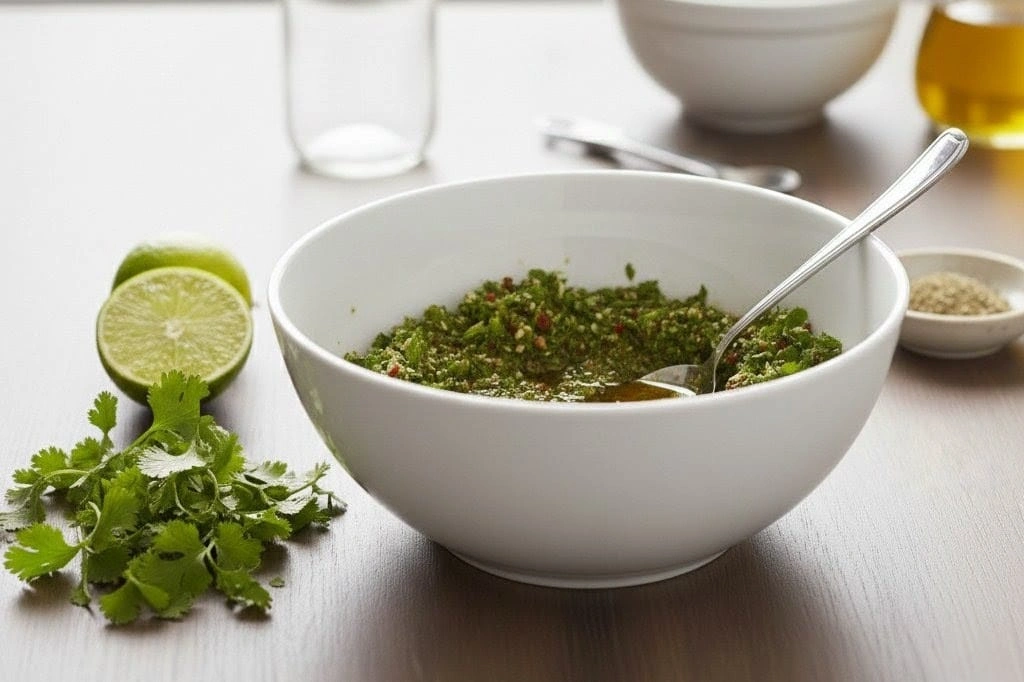
Hey, Welcome to the Puerto Rican Chimichurri Recipe. Puerto Rican Chimichurri is a garlicky, herb-packed sauce with a citrusy kick that adds bold flavor to meats, seafood, and veggies.
I still remember the first time I made this sauce at home—you know that moment when one spoonful makes you say, “Why haven’t I been doing this forever?”
If you love vibrant, fresh flavors as I do, you’re going to enjoy how easy and versatile this Puerto Rican Chimichurri Recipe is.
Let me walk you through it step by step, just like I’d do in my own kitchen.
Recipe Overview
Prep Time: 10 minutes
Cook Time: 0 minutes
Total Time: 10 minutes
Servings: 6
Cuisine: Puerto Rican
Category: Sauce
History and Origin
Puerto Rican Chimichurri, often called Chimichurri Boricua, is inspired by classic Latin herb sauces but adapted with Caribbean flavors.
Over time, it became a popular accompaniment for grilled meats, especially chicken and pork, across Puerto Rico.
What does Puerto Rican Chimichurri taste like?
This sauce tastes fresh, tangy, and slightly garlicky with a bright herbal finish. You’ll notice citrus notes balanced with olive oil and mild heat, making it bold without overpowering your food.
By the way, you can also try the Logan’s Roadhouse Steamed Broccoli Recipe.
Puerto Rican Chimichurri Ingredients
You will need the following ingredients to start making the Best Puerto Rican Chimichurri Recipe:
| Ingredient | Quantity |
|---|---|
| Fresh cilantro (finely chopped) | 1 cup |
| Fresh parsley (finely chopped) | ½ cup |
| Garlic cloves (minced) | 4 |
| Olive oil | ½ cup |
| White vinegar or lime juice | 3 tablespoons |
| Dried oregano | 1 teaspoon |
| Red pepper flakes | ½ teaspoon |
| Salt | 1 teaspoon |
| Black pepper | ½ teaspoon |
Equipment Needed
Also, gather the following equipment, as they are necessary to craft your Easy Puerto Rican Chimichurri Recipe:
- Cutting board
- Sharp knife
- Mixing bowl
- Measuring cups and spoons
- Spoon or whisk
How to Make Puerto Rican Chimichurri Recipe
Step 1: Chop the Herbs
Finely chop the cilantro and parsley. I always recommend using fresh herbs—they make a huge difference in flavor.
Step 2: Add Garlic and Seasonings
Add the minced garlic, oregano, red pepper flakes, salt, and black pepper to the bowl with the herbs.
Step 3: Mix in Liquids
Pour in the olive oil and vinegar (or lime juice). Stir everything until well combined and glossy.
Step 4: Rest and Taste
Let the sauce rest for about 5 minutes. Give it a taste and adjust salt or acidity if needed—you’re in control here.
Recipe Card
Puerto Rican Chimichurri Recipe
Ingredients
Equipment
Method
- Finely chop the cilantro and parsley. I always recommend using fresh herbs—they make a huge difference in flavor.

- Add the minced garlic, oregano, red pepper flakes, salt, and black pepper to the bowl with the herbs.

- Pour in the olive oil and vinegar (or lime juice). Stir everything until well combined and glossy.

- Let the sauce rest for about 5 minutes. Give it a taste and adjust salt or acidity if needed—you’re in control here.

Notes
Nutritional Information
Below, I have listed the nutritional information for the Puerto Rican Chimichurri Recipe:
| Nutrient | Amount (per serving) |
|---|---|
| Calories | 120 kcal |
| Fat | 13 g |
| Saturated Fat | 2 g |
| Carbohydrates | 2 g |
| Protein | 0.5 g |
| Sodium | 180 mg |
Serving Suggestions
I love serving this Puerto Rican Chimichurri over grilled chicken, steak, or shrimp. You can also drizzle it on roasted vegetables or use it as a dipping sauce for crusty bread.
Storage Tips
Store the chimichurri in an airtight container in the refrigerator for up to 5 days. Give it a quick stir before using, as the oil may separate naturally.
Why Puerto Rican Chimichurri Is So Popular in the United States
I’ve noticed that people across the U.S. love Puerto Rican chimichurri because it delivers bold flavor without feeling heavy.
You get freshness, acidity, and richness all in one spoonful, which fits perfectly with American grilling culture.
Puerto Rican Chimichurri vs Argentine Chimichurri
You might be wondering how this version compares to the classic Argentine chimichurri. Puerto Rican chimichurri leans brighter and more citrusy, with a stronger herb-forward taste that feels lighter and fresher on the palate.
Best Olive Oil to Use for Chimichurri
I always tell you to choose a good-quality extra virgin olive oil because it’s the base of the sauce.
A smooth, fruity olive oil enhances the herbs instead of overpowering them, making every bite taste balanced.
Can You Customize Puerto Rican Chimichurri?
One thing I love about this recipe is how flexible it is. You can adjust the garlic, acidity, or heat level to match your taste, which means this sauce truly becomes your signature condiment.
Making Puerto Rican Chimichurri for Meal Prep
If you’re into meal prepping like I am, this sauce is a lifesaver. Making a batch ahead of time gives you instant flavor for chicken, veggies, and seafood throughout the week.
Common Mistakes to Avoid When Making Chimichurri
I’ve learned that over-chopping herbs or using old ingredients can dull the flavor. Keeping the herbs fresh and cutting them gently helps maintain that vibrant, just-made taste you want.
Is Puerto Rican Chimichurri Healthy?
You’ll be happy to know this sauce is naturally healthy. It’s packed with fresh herbs, healthy fats from olive oil, and no artificial additives, making it a smart choice for clean eating.
Using Puerto Rican Chimichurri as a Marinade
Sometimes I use this chimichurri as a quick marinade, especially for chicken or shrimp. Letting the protein sit for even 20–30 minutes adds incredible flavor before cooking.
Puerto Rican Chimichurri for Vegetarians and Vegans
If you follow a vegetarian or vegan diet, this recipe is already perfect for you. I often drizzle it over grilled vegetables, tofu, or roasted potatoes for an instant flavor boost.
Conclusion
This Puerto Rican Chimichurri Recipe is one of those sauces you’ll want to keep on repeat—it’s quick, fresh, and incredibly flavorful. Once you try it, I’m sure it’ll become a staple in your kitchen too.
With these words, we came to the end of this article. Please share this recipe with your loved ones and give it a 5-star rating at the end of the FAQs section if you enjoy it!
Happy Cooking!
Frequently Asked Questions (FAQs)
What makes Puerto Rican chimichurri different?
Puerto Rican chimichurri uses more fresh herbs and citrus, giving it a brighter, Caribbean-inspired flavor.
Can I make Puerto Rican chimichurri ahead of time?
Yes, you can make it up to 2 days in advance and store it in the fridge.
Is Puerto Rican chimichurri spicy?
It’s mildly spicy, but you can easily adjust the heat by adding or reducing red pepper flakes.
What meats go best with Puerto Rican chimichurri?
It pairs best with grilled chicken, pork, steak, and seafood.
Can I freeze Puerto Rican chimichurri?
Freezing isn’t recommended, as fresh herbs lose their texture and flavor.
You will also like the Logan’s Roadhouse Ranch Dressing Recipe.

2 thoughts on “Puerto Rican Chimichurri Recipe”